Furnace Repair Service Warning Signs You Should Never Ignore
A furnace is a bit like a quiet roommate with one job: keep the house comfortable and do not make things weird. Most of the heating season, it sits in a basement, closet, crawl space, attic, or utility room doing exactly that. Then one night it starts banging like someone dropped a toolbox down the stairs, or it blows air with all the warmth of a disappointed handshake.
That is usually when homeowners start bargaining with it.
Maybe it is fine. Maybe it just needs to “work itself out.” Maybe if you turn the thermostat off and on again, like a medieval wizard with a wall control, everything will go back to normal.
Sometimes a furnace does recover from a small hiccup. More often, warning signs are the system’s way of clearing its throat before the expensive speech. Knowing when to call for furnace repair service can keep a nuisance from becoming a no-heat emergency, a cracked heat exchanger scare, a frozen pipe disaster, or a carbon monoxide risk. And yes, there is a big difference between “my furnace is acting odd” and “everyone out of the house now.”
Let’s talk about the signs worth taking seriously, what they might mean, and when a heating contractor should get involved before the furnace decides to retire during the coldest week of the year, because furnaces have a flair for drama.
The furnace is making new noises, and none of them sound expensive in a charming way
Every furnace makes some noise. A healthy forced-air furnace may whoosh when burners ignite, hum as the blower motor runs, and click softly when relays open or close. If you have lived in the same house for a while, you know its normal soundtrack. The trouble starts when that soundtrack adds percussion.
A loud bang at startup can point to delayed ignition. Gas builds for a moment before lighting, then ignites with a thump. That is not a cute personality trait. Delayed ignition can stress the heat exchanger and burner assembly. Dirt, improper gas pressure, weak ignition components, or burner issues may be involved. This is one of those moments where a gas installation service or qualified furnace technician earns their keep. Gas is not the place for “I saw a guy do it online.”
A scraping or grinding noise often suggests blower wheel or motor problems. I have seen blower wheels so loose they shaved metal from the housing, producing a sound somewhere between a coffee grinder and a raccoon with a vendetta. If caught early, the repair might be a bearing, motor, wheel adjustment, or cleaning. If ignored, it can turn into a full blower assembly replacement.
High-pitched squealing commonly comes from a failing belt on older belt-driven systems, worn bearings, or motor stress. Modern direct-drive blowers do not use belts, but they still complain when bearings are wearing out. Rattling can be loose panels, cracked components, or duct movement. Small rattle, small fix. Large rattle that keeps changing pitch, not so small.
The practical rule is simple: if the furnace has developed a new noise that makes you pause mid-coffee, have it checked. Your ears are often the cheapest diagnostic tool in the house.
Weak airflow is not just a comfort issue
When warm air barely dribbles from the vents, many people blame the thermostat or the weather. Fair enough, weather is guilty of many things. But poor airflow can come from several furnace problems, and some of them cause real damage if ignored.
A clogged air filter is the classic culprit. Filters are simple, cheap, and somehow still responsible for a staggering number of service calls. A dirty filter restricts airflow, forcing the blower to work harder and causing the furnace to run hotter than intended. Eventually, the system may trip the high-limit switch and shut itself down to prevent overheating. If it happens repeatedly, parts wear faster.
Duct problems can also reduce airflow. Disconnected ducts in a crawl space or attic send expensive heated air into places where no one is enjoying it, except perhaps spiders. Crushed flex duct, closed dampers, leaky return ducts, and poorly designed runs can all make a furnace seem weak even when the equipment itself is working.
Then there are blower issues. A failing blower motor, dirty blower wheel, weak capacitor, or control board trouble may reduce air delivery. If your furnace runs but the vents feel lazy, it is time for more than a filter check.
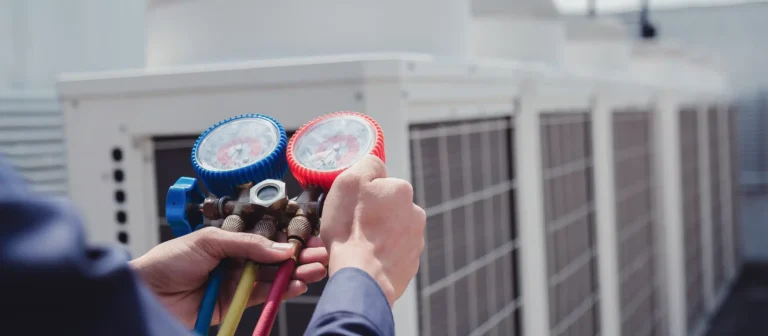
Weak airflow also affects air conditioning. The same blower usually moves air for both heating and cooling, so a winter airflow problem may become a summer air conditioning repair problem. An air conditioning contractor will tell you the evaporator coil can freeze when airflow is poor. A heating contractor will tell you the furnace can overheat. Both are right. The system is one shared respiratory tract, and it does not appreciate being stuffed up.
The air is cold, lukewarm, or strangely inconsistent
If the furnace is blowing cold air, the first suspects are not always terrifying. The thermostat may be set to “fan on,” which runs the blower even when the burners are off. Someone may have bumped the setting. Kids, guests, and well-meaning relatives have all caused fake furnace emergencies with one finger.
If the thermostat is properly set and the furnace still blows cold or barely warm air, the cause may be ignition failure, gas supply trouble, a dirty flame sensor, a malfunctioning gas valve, pressure switch issues, blocked venting, or a limit switch shutting the burners down. On high-efficiency furnaces, condensate drainage problems can also interrupt operation. A plugged condensate line can stop the furnace because the system is designed to protect itself. It is annoying, but it is better than letting exhaust or moisture go where it should not.
Inconsistent heat can be trickier. One room feels like a bakery while another feels like a walk-in cooler. Sometimes the furnace is fine and the ductwork is the villain. Other times the furnace is short cycling, which means it turns on and off too frequently. Short cycling can come from overheating, oversized equipment, thermostat placement, flame sensor issues, or restricted airflow.
A furnace that cannot produce steady heat deserves attention. The longer it limps along, the more likely it is to damage components around the original failure. Furnaces are team sports. When one player stumbles, the others pick up the load until they pull something.
The flame looks wrong, and yes, the color matters
A gas furnace flame should generally burn blue. A little flicker or tiny yellow tip can happen depending on the design and conditions, but a lazy yellow or orange flame can indicate incomplete combustion. That is not a decorating choice. Incomplete combustion can produce more carbon monoxide, soot, and heat exchanger stress.
You may also notice soot marks around the furnace, burner compartment, or nearby registers. Soot in a gas furnace is not normal. Oil furnaces have their own combustion patterns and maintenance needs, but soot still deserves professional evaluation.
Do not try to adjust burners yourself. Combustion is measured with proper instruments, not vibes. A trained technician can check gas pressure, burner cleanliness, vent draft, oxygen, carbon monoxide, and carbon dioxide levels. An experienced electrician may be needed if electrical controls are misbehaving, but combustion work belongs with licensed heating professionals familiar with fuel-burning equipment.
If the flame pattern changes after other work in the home, pay attention. I have seen furnace issues appear after remodeling, after water heater installation, after basement finishing, and after people boxed in a mechanical room so tightly the appliances could barely breathe. Furnaces and water heaters need combustion air and proper venting. When they do not get it, they become grumpy in ways that can hurt people.
Your carbon monoxide detector has opinions
A carbon monoxide alarm is not a suggestion box. If it goes off, treat it as an emergency. Leave the home, call emergency services or the gas utility from outside, and do not re-enter until it is cleared by qualified responders.
Carbon monoxide is colorless, odorless, and rude enough to give no obvious warning before causing serious harm. Symptoms can include headache, dizziness, nausea, weakness, confusion, and sleepiness. People often mistake early symptoms for flu or fatigue. Pets can show signs too, sometimes before people do.
A furnace can contribute to carbon monoxide problems if it has a cracked heat exchanger, blocked flue, improper combustion, backdrafting, or venting defects. Other fuel-burning appliances can also be involved, including gas water heaters, fireplaces, ranges, boilers, and generators used improperly. This is why a whole-home view matters. A furnace repair service may identify the heating issue, while a plumber or gas installation service may be needed if the problem involves gas piping, venting connections, or nearby appliances.
Carbon monoxide detectors should be placed according to manufacturer instructions and local code guidance. Many homes benefit from alarms near sleeping areas and on each level. Replace them when they reach the end of their listed service life. Pressing the test button only checks the alarm function, not whether the sensor is still within its lifespan forever.
Short cycling: the furnace equivalent of pacing nervously
Short cycling means the furnace starts, runs briefly, stops, then starts again soon after. It wastes energy, reduces comfort, and wears out parts. Ignition systems, blower motors, pressure switches, relays, and control boards do not enjoy constant on-off exercise.
Sometimes short cycling is caused by simple airflow restriction. A filthy filter can do it. Blocked return vents can do it. Supply registers closed in too many rooms can do it. Homeowners sometimes close vents to “save heat,” but forced-air systems are not that easily fooled. Closing too many registers can increase static pressure, reduce airflow, and stress the equipment.
Oversized furnaces short cycle because they heat the space too quickly without running long enough to distribute air evenly. This is common in older homes where someone replaced equipment using the “bigger is better” method, also known as the “let’s wear a snowmobile suit to dinner” method. Proper sizing matters, whether for furnace replacement, heat pump installation, or air conditioning installation.
A thermostat installed near a supply vent, sunny window, kitchen, or drafty door can also cause erratic operation. The thermostat thinks the whole house has reached temperature because its little corner did. Meanwhile, the back bedroom is filing a complaint.
Short cycling is worth diagnosing early. It is not only a comfort problem. It is a symptom with multiple possible causes, and guessing can lead to replacing perfectly good parts while the real issue sits there smirking.
Strange smells: what is normal, what is not
The first time you run the furnace for the season, a dusty burning smell is common. Dust on the heat exchanger, burners, and duct surfaces warms up and produces that familiar “autumn has arrived and so has my sinuses” odor. It should fade within a few hours.
Persistent burning smells are different. An electrical burning odor can indicate overheated wiring, a failing motor, control board problems, or a component drawing too much current. Shut the system off and call for service. If you see smoke or smell something acrid and strong, treat it seriously.
A rotten egg smell may indicate a natural gas or propane leak, since odorant is added to fuel gas for detection. Leave immediately, avoid operating switches or phones inside, and call the gas utility or emergency services from outside. Do not hunt for the leak with a lighter unless your long-term plan involves becoming a cautionary tale.
Musty smells can point to moisture in ducts, a dirty evaporator coil, humidifier trouble, or drainage issues. While musty odor is often associated with cooling season and air conditioning maintenance, it can show up during heating too, especially if the system shares ductwork with a neglected AC coil or whole-house humidifier. Moisture problems can also intersect with plumbing leak repair. A slow leak near a furnace or return duct can create odors that seem mechanical at first.
Sewer-like odors near mechanical rooms may come from dry floor drains, septic system service issues, or plumbing vent problems rather than the furnace itself. This is where trades overlap. A heating contractor may find the furnace is innocent, then a plumber discovers the floor drain trap has dried out or the septic line needs attention. Houses are ecosystems, which is a polite way of saying one problem can impersonate another.
Your utility bills are climbing without a good excuse
Heating bills vary with weather, fuel prices, thermostat habits, insulation, and how often the front door is opened by someone who was apparently raised in a barn. Still, a sudden unexplained increase deserves a look.
A furnace losing efficiency may run longer because burners are dirty, airflow is restricted, ductwork leaks, the blower is underperforming, or controls are malfunctioning. A system that once held 70 degrees comfortably but now struggles at 67 is telling you something. It may not be dramatic enough to fail outright, but it is costing money every cycle.
Compare bills carefully. Look at usage, not just total cost. Many gas and electric bills show therms or kilowatt-hours. If fuel rates rose, your bill may increase even if the furnace is fine. If usage rose sharply during similar weather, the equipment or building envelope may be at fault.
This is also where air conditioning maintenance and furnace maintenance share a lesson. Tune-ups do not make old equipment immortal, but they help systems operate closer to their intended performance. A proper heating tune-up includes more than a quick filter glance and a sticker on the cabinet. It should involve safety checks, combustion evaluation when applicable, electrical measurements, blower inspection, venting review, thermostat operation, and cleaning where needed.
Water around the furnace is not always a plumbing problem
High-efficiency condensing furnaces produce water as part of normal operation. That condensate must drain properly. If you see water around the furnace, the drain tubing, trap, condensate pump, or floor drain may be clogged or failed. In freezing climates, condensate lines routed through cold spaces can freeze and shut the furnace down.
Standard-efficiency furnaces should not usually produce condensate in the same way. Water nearby could come from a humidifier, air conditioner condensate line, water heater, plumbing leak, or even seepage through the foundation. The location and timing matter. Water appearing only when the air conditioning runs may point to AC condensate issues. Water appearing during heating season near a high-efficiency furnace may point to the furnace drain. Water under a nearby tank may mean water heater repair is in your immediate future.
Do not ignore water near electrical controls, gas valves, or blower compartments. Moisture and electricity are not a buddy comedy. A heating contractor can diagnose furnace-related condensate trouble, while a plumber may need to handle floor drains, leaking pipes, water heater installation problems, water softener installation discharge issues, or drainage concerns.
The furnace keeps tripping breakers or blowing fuses
A tripped breaker is not the house being quirky. Breakers trip to protect wiring from overheating. If the furnace circuit trips repeatedly, leave it off and call for help. Resetting it again and again is like hitting snooze on a smoke alarm.
Electrical issues can come from a failing blower motor, shorted wiring, transformer problems, control board failure, inducer motor trouble, or an overloaded circuit. Sometimes the furnace shares a circuit it should not share. Sometimes previous repairs left wiring in questionable condition. Sometimes rodents decide insulation tastes like a delicacy, because apparently the universe needed that.
An electrician may be needed for circuit, panel, or wiring defects outside the furnace. A furnace technician handles internal furnace components. In some companies, especially full-service mechanical firms, the same provider may professional water heater installation offer electrician, heating contractor, air conditioning repair service, and plumbing support. That can be useful when the problem refuses to stay in one trade’s lane.
When the pilot light or ignition keeps failing
Older furnaces may have a standing pilot light. Newer ones usually use hot surface ignition or spark ignition. Either way, repeated ignition failure needs diagnosis.
For standing pilots, the issue could be a dirty pilot orifice, bad thermocouple, weak flame, gas supply problem, or draft issue. For modern ignition systems, common culprits include flame sensors, igniters, pressure switches, control boards, blocked intake or exhaust piping, inducer problems, and condensate backups.
A dirty flame sensor is one of the more common repairs. The furnace lights, proves flame briefly, then shuts down because the sensor cannot properly confirm combustion. Cleaning or replacing the sensor may solve it, but the technician should still check why it got dirty and whether the burner operation looks right.
Repeated ignition failures are hard on equipment and uncomfortable for humans. They also tempt people to remove panels, tape switches, or bypass safeties. Do not. Furnace safety switches are not obstacles. They are the bouncers keeping bad things from entering the club.
A quick homeowner check before calling, without getting heroic
There are a few reasonable things to check before scheduling furnace repair service. These are not repairs so much as “make sure the obvious gremlins are not responsible.” Keep it simple, and if anything smells like gas, looks burned, or involves opening sealed combustion components, stop.
- Confirm the thermostat is set to heat, the temperature setting is above room temperature, and the batteries are fresh if it uses them.
- Check the air filter and replace it if it is dirty, collapsed, damp, or the wrong size.
- Make sure supply and return vents are open and not blocked by rugs, furniture, laundry baskets, or one ambitious dog bed.
- Look at the furnace switch, breaker, and service panel, but do not keep resetting a breaker that trips again.
- For high-efficiency furnaces, glance at the exterior intake and exhaust pipes to see if snow, leaves, nests, or debris are blocking them.
If those checks do not solve the issue, call a professional. A good technician will not judge you for checking the thermostat first. They might silently appreciate it. Nobody enjoys driving across town to discover the system was set to cool, though it does make for a story.
When to shut the furnace off immediately
Some warning signs are not “schedule someone soon” situations. They are “turn it off and take action now” situations. The furnace is a controlled fire inside a metal box connected to your living space. That arrangement works beautifully when everything is correct. When it is not, caution wins.
Shut the system down and seek urgent help if you notice any of the following:
- Carbon monoxide alarm activation, especially with symptoms such as headache, dizziness, nausea, or confusion.
- Rotten egg or gas odor near the furnace or anywhere in the home.
- Smoke, scorching, melted wiring smell, or visible sparks.
- Flame rollout, where flames appear outside the burner area instead of staying contained.
- Loud boom at ignition that repeats, or any sign of physical damage to the furnace cabinet or venting.
For gas odor or carbon monoxide alarms, leave the home and call from outside. For electrical burning or smoke, turn off the system if it is safe to do so and call emergency help if needed. Property can be repaired. People and pets are harder to replace, and the paperwork is dreadful.
Age matters, but it does not tell the whole story
Many furnaces last around 15 to 20 years, with some failing earlier and some soldiering on longer. Lifespan depends on installation quality, maintenance, local climate, runtime, filtration, duct design, and whether previous repairs were done properly. A neglected 9-year-old furnace can be in worse shape than a well-maintained 18-year-old unit.
Age becomes more important when repair costs rise. Replacing a flame sensor on an older furnace may make perfect sense. Replacing a heat exchanger, major blower assembly, gas valve, and control board on a 22-year-old system may not. At that point, a heating contractor should talk through repair versus replacement honestly.
Efficiency also matters. Older furnaces may have lower annual fuel utilization efficiency than modern units. But replacement is not automatically the right answer. If the home has leaky ducts, poor insulation, or airflow problems, a new furnace may still disappoint. The best contractors look beyond the box. They check duct capacity, venting, gas line sizing, electrical requirements, thermostat compatibility, and sometimes whether a heat pump installation makes sense as part of a dual-fuel setup.
Heat pumps have gained popularity, especially in moderate climates and well-insulated homes. In colder regions, cold-climate models can perform impressively, but design matters. Some homeowners pair a heat pump with a gas furnace for flexibility. Others stick with gas heat because of climate, utility rates, or existing infrastructure. There is no universal answer, despite what sales brochures whisper.
Maintenance is cheaper than mid-January panic
A furnace tune-up is not glamorous. Nobody invites neighbors over to admire a clean flame sensor. Still, maintenance reduces surprise breakdowns and catches safety issues early. It is the HVAC version of brushing your teeth, except the furnace cannot hold a tiny cup at the sink.
A solid maintenance visit should include checking burners, ignition, flame sensing, blower operation, safety controls, venting, gas pressure where appropriate, temperature rise, electrical connections, amperage, and thermostat operation. On high-efficiency furnaces, condensate drains and traps should be inspected. Filters should be reviewed, though homeowners still need to replace them between visits.
How often should maintenance happen? Most manufacturers and contractors recommend annual heating maintenance. Homes with pets, heavy dust, renovations, or high system use may need more frequent filter changes and occasional extra attention. If you have central cooling, schedule air conditioning maintenance or an air conditioning tune-up before cooling season too. The blower, filter, and ductwork serve both sides of comfort, so ignoring one season can punish the other.
A maintenance visit is also a chance to ask annoying but useful questions. Is the temperature rise within range? Is the blower wheel dirty? Are there signs of backdrafting? Is the vent connector sound? Does the ductwork look undersized? Good technicians like informed questions. It gives them permission to explain what they are seeing instead of performing the ancient ritual of nodding at the furnace and leaving.
The furnace may be blamed for problems caused by the rest of the house
One of the more humbling truths in home service is that the apparent culprit is not always guilty. A furnace may get blamed for cold rooms when the real issue is missing insulation, leaky windows, duct leakage, or a return air shortage. It may get blamed for odors caused by a dry drain trap, septic issue, or hidden plumbing leak. It may get blamed for humidity problems tied to ventilation, crawl space moisture, or an oversized air conditioner that never runs long enough in summer.
I once saw a homeowner convinced their furnace was “drying out the house.” Forced-air heat can make dry winter air more noticeable, but the real problem was a whole-house humidifier with a closed water valve. Another time, a no-heat call turned into drain cleaning because a backed-up floor drain had flooded the furnace area and tripped safety controls. A rooter service cleared the line, and the furnace technician handled the wet components. Teamwork, with fewer capes than one might hope.
Hydrojetting may even enter the story if chronic drain backups threaten mechanical equipment in basements. Plumbing repiping can matter if old leaking pipes repeatedly soak areas near ducts or equipment. Water heater repair can be relevant when shared venting or mechanical room combustion air becomes part of the safety picture. Lighting contractor work may sound unrelated, but if attic lighting, basement wiring, or utility room circuits are unsafe, it can affect serviceability and safety around HVAC equipment.
Homes do not care about trade categories. They care about physics, water, air, fuel, electricity, and gravity. Gravity, especially, remains undefeated.
Choosing the right furnace repair service
A good furnace repair service does more than swap parts until the noise stops. The technician should ask questions, observe operation, test components, and explain findings in plain language. If combustion or venting is involved, they should use proper diagnostic tools. If the repair involves gas, electrical, or code-sensitive work, licensing and training matter.
Be cautious with anyone who diagnoses a major repair without opening the furnace, measuring anything, or listening to the full symptom history. Also be cautious with anyone who treats every repair call as a replacement sales appointment. Yes, old furnaces eventually need replacement. No, every squeak is not a moral failure requiring a new system by Friday.
Good contractors document what they found. They can tell you whether a part failed, why it may have failed, and whether other conditions contributed. They discuss safety clearly. They do not make carbon monoxide sound casual, and they do not use scare tactics for a dirty filter. There is a difference between urgency and theater.
If you already use a trusted plumber, electrician, air conditioning contractor, or heating contractor, ask whether they handle furnace work directly or coordinate with qualified partners. Full-service companies can be convenient for overlapping issues like furnace condensate drains, gas piping, water heaters, electrical circuits, and air conditioning repair. The key is competence, not the number of services printed on the truck.
The repair-or-replace conversation nobody loves
At some point, a furnace stops being a repair candidate and starts auditioning for the recycling yard. The decision usually comes down to age, safety, repair cost, reliability, efficiency, and comfort.
A minor repair on a 12-year-old furnace that has been maintained well is usually easy to justify. A major repair on a 25-year-old furnace with rust, recurring ignition problems, noisy blower operation, and questionable venting is a harder sell. If the heat exchanger is cracked, replacement often becomes the practical path, especially if the furnace is older. Heat exchanger replacement can be expensive, and safety must drive the decision.
Ask for options. Sometimes there is a minimum safe repair that buys time, a more complete repair that restores reliability, and a replacement option that improves efficiency and warranty coverage. A reputable contractor will explain the trade-offs without acting like your only choices are “sign here” or “freeze heroically.”
Timing also matters. If your furnace is limping in late fall, you may have time to compare options. If it fails during a polar vortex, your choices narrow. This is why warning signs matter. They give you time, and time is the one accessory no emergency repair comes with.
Trust the small signs before they become large bills
Furnaces rarely fail at a convenient moment. They prefer holidays, overnight cold snaps, dinner parties, and the exact weekend your in-laws arrive with opinions. The good news is that many failures announce themselves first. A new noise, weak airflow, uneven heat, repeated cycling, strange odor, rising bills, water near the unit, ignition trouble, or a tripped breaker can all be an early warning.
Some signs call for routine service. Some call for urgent shutdown. The trick is not to become a furnace whisperer overnight, but to respect what the equipment is telling you. Change the filter. Keep vents clear. Pay attention to sounds and smells. Maintain carbon monoxide detectors. Schedule annual service. And when the furnace starts behaving like it has joined a garage band, call a qualified furnace repair service before the encore costs you twice as much.
A comfortable home depends on several quiet systems doing their jobs: heating, cooling, plumbing, electrical, drainage, ventilation, and sometimes a little luck. Luck is lovely, but maintenance and timely repair are more reliable. Your furnace does not need applause. It just needs clean airflow, safe combustion, sound controls, and someone willing to take warning signs seriously before winter turns theatrical.
Name: Service Lion Plumbing Heating Air Electric
Address: 521 W Briardale Ave, Orange, CA 92865, United States
Phone: (657) 567-7305
Website: https://callservicelion.com/
Email: [email protected]
Hours:
Monday: Open 24 hours
Tuesday: Open 24 hours
Wednesday: Open 24 hours
Thursday: Open 24 hours
Friday: Open 24 hours
Saturday: Open 24 hours
Sunday: Open 24 hours
Open-location code: R48R+WV Orange, California, USA
Map/listing URL:
https://www.google.com/maps/search/?api=1&query=Google&query_place_id=ChIJQU4LBWHV3IARtnABtyykSA4
Google Map:
Socials:
https://www.facebook.com/ServiceLionCA/
https://www.youtube.com/channel/UCR_L35QzsRTxYZtX8PxJvPw
Local Service Information
Service Lion Plumbing Heating Air Electric provides plumbing, drain, heating, air conditioning, and electrical services from its Orange, California location.The company serves homeowners and properties throughout Orange and communities across Orange County and surrounding areas.
Available services include plumbing repairs, water heater work, drain and sewer services, heating and cooling service, electrical repairs, panels, lighting, outlets, and related home-system work.
Service is available for residential properties as well as light commercial needs described within the company's local service-area information.
The company's website emphasizes locally operated service, coordinated home-system support, and practical scheduling for plumbing, HVAC, and electrical needs.
The matching public business listing shows the Orange location as open 24 hours a day, seven days a week.
For service information or scheduling, call (657) 567-7305 or visit https://callservicelion.com/.
The public map listing identifies the business at 521 W Briardale Ave, Orange, CA 92865 and can be used for location and direction information.
Popular Questions About Service Lion Plumbing Heating Air Electric
What services does Service Lion Plumbing Heating Air Electric provide?
The company provides plumbing, drain and sewer, heating, air conditioning, and electrical services. Its published services include plumbing repair, water heaters, drain clearing, sewer work, HVAC repair and installation, electrical repairs, panels, circuit breakers, lighting, outlets, and related services.
Where is Service Lion Plumbing Heating Air Electric located?
The matching business location is 521 W Briardale Ave, Orange, CA 92865, United States.
What areas does Service Lion Plumbing Heating Air Electric serve?
The company serves Orange County and surrounding communities. Its published service-area information includes Orange, Anaheim, Brea, Yorba Linda, Fullerton, Huntington Beach, Newport Beach, Costa Mesa, Irvine, Lake Forest, and additional nearby cities.
Is Service Lion Plumbing Heating Air Electric open 24 hours?
The matching public business listing shows the location as open 24 hours on Monday through Sunday.
Does Service Lion Plumbing Heating Air Electric work on drains and sewer lines?
Yes. Published services include drain clearing, rooter service, camera inspection, hydro jetting, sewer line repair and installation, water line work, slab leak detection, and trenchless sewer line repair.
Does Service Lion Plumbing Heating Air Electric provide heating and air conditioning service?
Yes. Its published HVAC services include air conditioning repair and installation, heating service, furnace work, heat pumps, air ducts, indoor air quality assessments, and thermostat installation.
Does Service Lion Plumbing Heating Air Electric provide electrical service?
Yes. Published electrical services include repairs and installations, electrical panels, circuit breakers, safety inspections, lighting, outlets and switches, surge protection, generators, and EV charging equipment installation.
How can I contact Service Lion Plumbing Heating Air Electric?
Call (657) 567-7305.
Email: [email protected]
Website: https://callservicelion.com/
Facebook: https://www.facebook.com/ServiceLionCA/
Landmarks Near Orange, California
Old Towne Orange Historic District
A central historic district and useful geographic reference point for the Orange community.
Plaza Park
A well-known public gathering point in the center of Old Towne Orange.
Orange Public Library & History Center
A civic landmark serving residents near central Orange.
Hart Park
A major public park and recreation area south of central Orange.
Eisenhower Park
A public park serving neighborhoods in northern Orange.
Santiago Oaks Regional Park
A regional recreation and open-space landmark on the eastern side of Orange.
Irvine Regional Park
A large regional park and recognizable reference point east of the city.
Orange Park Acres
A distinctive residential community and service-area reference point in eastern Orange.
El Modena
An established Orange neighborhood that provides a practical local coverage reference.
Glassell Street
One of the city's principal north-south streets and a useful route through central Orange.
Lincoln Avenue
A major east-west roadway serving northern Orange and nearby communities.
State Route 55
A primary regional freeway connecting Orange with other parts of Orange County.