Water Heater Installation Mistakes to Avoid
A water heater is one of those appliances nobody praises when it works. It sits in a closet, garage, basement, attic, or utility room like a quiet metal barrel of responsibility. Then one morning it quits, and suddenly everyone in the house develops strong opinions about shower temperature, laundry timing, and whether civilization itself has failed.
Water heater installation looks simple from a distance. Cold water in, hot water out, a fuel or electrical connection, a drain pan if you are feeling fancy. The trouble is that the distance is where all bad ideas look affordable. Up close, a proper installation involves combustion air, venting, seismic support in some regions, expansion control, electrical sizing, gas line capacity, condensate handling for certain models, drainage, local code, manufacturer instructions, and the small but important fact that pressurized hot water can be a menace when installed carelessly.
I have seen brand-new water heaters installed so badly they needed water heater repair before the warranty card made it to the kitchen junk drawer. I have seen flexible connectors bent like pretzels, vent pipes sloping the wrong way, temperature and pressure relief lines capped because “it dripped once,” and electric units wired with the sort of confidence normally reserved for karaoke after midnight. The good news is that most expensive mistakes are avoidable. The bad news is that water heaters rarely forgive optimism.
Choosing the wrong water heater for the house
The first installation mistake often happens before a wrench appears. Someone buys the wrong unit.
A water heater is not a toaster. You cannot just pick the shiny one, assume the larger number is better, and call it a day. A 40-gallon tank may work beautifully for a couple with efficient fixtures and a reasonable relationship with shower length. That same tank can cause domestic unrest in a household with teenagers, a soaking tub, and a washing machine that runs like a small industrial operation.
Tank size matters, but so does recovery rate. A gas water heater may reheat water faster than a comparable electric tank, depending on the model. A heat pump water heater can be wonderfully efficient, but it needs adequate air volume, enough clearance, and a location where cooler exhaust air will not create comfort problems. Put one in a tiny closet without proper airflow and it will perform like a marathon runner breathing through a cocktail straw.
Tankless units bring their own math. They are often sold as “endless hot water,” which is true in the same way a restaurant offers endless breadsticks. There are still conditions. Incoming groundwater temperature, flow rate, gas supply, venting, and simultaneous fixtures all matter. A tankless unit that can handle one shower in a mild climate may disappoint badly when two showers, a dishwasher, and a washing machine all demand hot water on a January morning.
This is where a good Plumber earns the fee before touching the pipe. The correct choice considers household demand, fuel type, installation location, utility capacity, water hardness, and long-term serviceability. If you already know your old system struggled, replacing it with the same size because “that’s what was there” is not a plan. It is nostalgia with fittings.
Ignoring local code because the old one was “fine”
Few phrases have caused more property damage than “the old one was fine.” The old one may have been installed before current code, before a remodel changed the space, before a previous owner took creative liberties, or before anyone noticed the vent connector was held together by hope and foil tape.
Water heater installation has local requirements for a reason. Some areas require seismic strapping. Many require a drain pan when the unit is installed in an attic, finished space, or anywhere leakage can damage the building. Garage installations may require elevation or protection from vehicle impact. Fuel-fired units need proper venting and combustion air. Electric water heaters need correct breaker sizing, conductor gauge, grounding, and disconnect provisions where required.
A professional installer does not merely recreate the old setup. They evaluate it. That may sound less fun than “swap and go,” but it prevents the grim comedy of installing a new appliance into an old hazard. If a gas water heater has been backdrafting for years, a shiny replacement connected to the same bad vent will not suddenly become safe out of politeness.
Permits are another sore subject. Homeowners sometimes skip them to save money or time. I understand the temptation. Nobody wakes up excited to invite paperwork into the home. But permitted work creates a record, an inspection, and a chance to catch errors before they become insurance claims. It also matters during home sales. Buyers get twitchy when they find an unpermitted gas installation service job in the utility room, especially if the venting looks like modern art.
Botching the temperature and pressure relief valve
The temperature and pressure relief valve, usually called the T&P valve, is not decorative. It is a safety device. If pressure or temperature inside the tank rises beyond safe limits, the valve opens and discharges water. That release can prevent the tank from becoming a very large, very angry pressure vessel.
The mistake I still see too often is improper discharge piping. The pipe should generally be full-sized to the valve outlet, made of approved material, run to a safe termination point, and installed without caps, plugs, valves, or uphill runs that trap water. Exact requirements vary by jurisdiction, but the principle does not: when the valve needs to discharge, it must be able to discharge freely.
Capping a dripping T&P line is like taping over the check-engine light, except the car is in your basement and filled with scalding water. If the valve drips, find the cause. It may be thermal expansion, excessive pressure, a failing valve, or overheating. The fix is not to silence the symptom.
A related error is terminating the pipe where nobody can see it. If the T&P valve is leaking, you want to know. Discharging into a crawl space or hidden wall cavity turns a safety warning into a mold experiment. If the water heater is installed in a pan with a drain, that drain should also be able to carry water somewhere useful. A pan with no drain is just a shallow metal wishing well.
Forgetting thermal expansion
Water expands when heated. That fact has been rude to plumbing systems for a long time.
In older homes with open water systems, expanded water could push back toward the municipal supply. Many modern systems have check valves, pressure-reducing valves, backflow preventers, or other devices that create a closed system. When water heats in a closed system, pressure rises. Without a properly sized expansion tank or approved expansion control method, that pressure can stress the water heater, fixtures, supply lines, and valves.
Signs of thermal expansion problems include T&P valve discharge, banging pipes, short-lived water heater components, and faucets that seem unusually aggressive when first opened. Sometimes the issue hides for a while, then shows up as premature failure. The water heater gets blamed, but the real culprit is pressure management.
Expansion tanks are not one-size-fits-all ornaments. They need correct sizing based on water heater volume, supply pressure, and temperature rise. They also need proper precharge. I have seen expansion tanks installed with factory air pressure that did not match the home’s water pressure, which is like wearing a life jacket filled with decorative foam. It looks ready. It is not doing the job correctly.
Treating gas work like a hobby
Gas water heater installation requires respect. Not fear, not theatrical panic, just respect. Gas piping must be properly sized, leak-tested, supported, and connected with approved materials. Sediment traps may be required. Shutoff valves must be accessible. Flexible connectors have rules for length, location, and reuse. Combustion air must be adequate. Venting must match the appliance category and manufacturer instructions.
One common mistake is assuming the existing gas line can handle a larger or tankless water heater. Tankless units often demand significantly more BTU input than traditional tanks. If the gas line is undersized, the unit may underperform, lock out, or affect other appliances such as a furnace. Then the homeowner calls a Furnace repair service because the furnace acts strange after the new water heater goes in. The furnace may be fine. The gas supply may be the bottleneck.
Another mistake is poor venting. Atmospheric draft water heaters rely on proper vent rise, connector slope, draft hood placement, and adequate makeup air. If the house has been tightened up with new windows, doors, insulation, or exhaust fans, the water heater may not draft the way the old installer expected. Backdrafting can spill combustion gases into the living space. That is not a quirky installation detail. That is a safety issue.
Power-vent and direct-vent units have their own requirements for pipe material, length, slope, termination clearances, and condensate management. A vent termination placed too close to a window, door, air intake, or neighboring structure can cause trouble. In cold climates, poorly planned terminations can freeze. In windy locations, bad placement can lead to nuisance shutdowns that always seem to happen when guests are visiting.
Gas installation service belongs in qualified hands. If someone says, “We will just soap it and see,” that is not automatically wrong, but it is not the entire professional process either. Proper testing, code compliance, combustion checks where appropriate, and attention to manufacturer instructions separate skill from improvisation.
Wiring electric water heaters casually
Electric water heaters look less dramatic than gas units because there is no flame. That calm appearance tricks people. Electricity remains quite capable of ruining the afternoon.
Common electric installation mistakes include undersized wiring, incorrect breaker size, missing grounding, loose connections, improper strain relief, and failing to verify voltage. A standard residential electric tank often requires a dedicated 240-volt circuit, but the exact requirements depend on the unit. You do not guess. You read the nameplate and installation manual, then match the circuit accordingly.
Loose electrical connections are especially sneaky. The water heater may work at first, then heat buildup damages wiring or components. Burned insulation inside a junction box is not a charming surprise. It is a warning that the installation was not right.
This is where an Electrician may need to join the project, especially if the panel is older, the circuit is questionable, or the homeowner is switching from gas to electric. Heat pump water heaters can also require specific electrical provisions. Some plug into dedicated receptacles, while others are hardwired. Some homeowners discover only after delivery that their ideal high-efficiency unit needs electrical work. At that point, the project becomes less “quick swap” and more “why is there drywall dust in my coffee?”
Placing the water heater where service becomes a wrestling match
A water heater needs space around it. Not because it enjoys personal boundaries, but because someone will eventually service it. Elements need replacement. Anode rods need inspection. Burners need cleaning. Filters on heat pump units need access. Drain valves need hoses attached. Tankless units need flushing. Expansion tanks need pressure checks. The unit may someday need removal, ideally without dismantling a wall like an archaeological dig.
I once saw a tank installed in a closet so tight the front panel could not be fully removed. The installer had technically fit the heater into the space. By that logic, a grand piano technically fits in a swimming pool. Service access matters.
Clearances also affect safety and performance. Gas units need proper clearance from combustibles and enough air for combustion unless they are direct-vent models designed otherwise. Heat pump units need adequate air volume and clearance for intake and exhaust. Tankless units need space for isolation valves, flushing ports, condensate neutralizers when required, and venting.
If the water heater is in an attic, the stakes rise. Attic installations need safe access, adequate work platform where required, drain pan provisions, and thoughtful routing. A leaking attic water heater can damage ceilings, insulation, flooring, cabinets, and family morale. It is hard to look dignified carrying buckets through a hallway at 2 a.m.
Skipping the drain pan or installing it badly
A drain pan is cheap compared with flooring, drywall, cabinetry, and the relationship strain caused by a ceiling stain shaped like Florida. Yet pans are often skipped, undersized, cracked during installation, or left without a drain line.
A pan should be large enough for the water heater and positioned so leaks actually land in it. That sounds obvious until you see a pan shoved under a unit at an angle with the drain fitting pointed uphill. The drain line should terminate somewhere appropriate and visible if local code allows, or to an approved location. It should not be reduced to a tiny tube that clogs with a dust bunny and a single mineral flake.
Pans do not replace proper installation. They are backup. A pan under a water Plumber heater with a dripping valve, corroded fitting, or sweating pipe is not a solution. It is a saucer under a volcano.
Leak detection devices are worth considering, especially in finished spaces or upper floors. Some systems shut off the water automatically when they detect moisture. They add cost, but they can prevent a small leak from becoming a renovation project. If you have ever priced hardwood floor replacement, you know the phrase “add cost” deserves context.
Failing to address old, corroded, or incompatible piping
A new water heater connected to failing pipes is like putting new tires on a car with a cracked axle. It may look like progress, but the weak link remains.
Old galvanized piping, corroded copper, brittle CPVC, poorly supported PEX, and questionable past repairs should be evaluated during installation. Dielectric corrosion can occur when dissimilar metals are connected improperly. Flexible connectors can simplify installation, but they must be approved for the use, installed without kinks, and not treated as a cure for bad alignment.
Sometimes a water heater replacement reveals broader plumbing problems. Low hot water flow may come from clogged galvanized pipe, not the heater. Rusty water may involve old piping as well as the tank. Repeated leaks near the heater may point to pressure issues, poor support, or the need for Plumbing repiping in part of the home.
This is also a good time to think about water quality. Hard water can shorten the life of water heaters, especially tankless models and heat pump units with specific maintenance needs. Water softener installation may make sense in areas with significant hardness, but it is not automatic for every house. Softened water can affect anode rod selection, maintenance intervals, and taste preferences. The right answer depends on the water, the equipment, and the homeowner’s priorities.
Not installing service valves on tankless systems
Tankless water heaters need maintenance. Anyone selling them as maintenance-free is either misinformed or practicing advanced sales yoga.
Scale buildup reduces efficiency and flow. In hard water areas, tankless units may need periodic flushing with a descaling solution. The interval varies based on water hardness, usage, and manufacturer guidance. Without isolation valves and flushing ports, maintenance becomes more difficult and more expensive. A technician may need to cut into piping or improvise, which is never the cheapest version of a service call.
Condensing tankless units also produce condensate. That condensate must be drained properly and, in many cases, neutralized before disposal depending on local requirements and equipment instructions. Ignoring condensate is a fine way to create corrosion, stains, or mystery puddles that everyone blames on the dog.
Tankless systems can be excellent. They save space, provide long runtimes, and may improve efficiency. But they are not magic rectangles. They need correct sizing, venting, fuel supply, electrical connection, freeze protection in vulnerable locations, and maintenance access. If any of those pieces are missing, the romance fades quickly.
Setting the temperature wrong
Most households do not need water hot enough to make tea directly from the showerhead. Temperature settings affect comfort, safety, energy use, and bacterial risk management. Many manufacturers ship or recommend settings around 120 degrees Fahrenheit for typical residential use, though specific situations may call for different settings. Higher temperatures can increase scald risk, especially for children, older adults, and people with reduced sensation or mobility.
Some homes use mixing valves to store water at a higher temperature while delivering safer temperatures to fixtures. That can be useful in larger homes or specific system designs, but the valve must be installed and adjusted correctly. A misadjusted mixing valve can cause lukewarm complaints, scald hazards, or confusing temperature swings.
Turning the thermostat higher to compensate for poor performance often masks another problem. Sediment buildup, a broken dip tube, failed electric element, undersized unit, crossover at a fixture, or incorrect piping may be the real issue. Raising the temperature may buy time, but it can also raise risk and energy use.
Forgetting sediment, flushing, and the drain valve
Sediment is the uninvited guest at the bottom of many tank water heaters. Minerals settle, harden, and reduce efficiency. Gas units may rumble or pop as water trapped under sediment flashes into steam. Electric lower elements may fail faster when buried in mineral buildup. In extreme cases, drain valves clog so badly that draining the tank becomes an ordeal involving patience, adapters, and language unsuitable for a family newsletter.
During installation, the drain valve should be accessible. If it points into a wall or sits half an inch above the pan edge, maintenance will be miserable. Some installers upgrade flimsy factory drain valves to full-port brass valves, depending on the situation and warranty considerations. That small upgrade can make future flushing easier.
Flushing frequency depends on water quality and usage. Some homes benefit from annual flushing. Others with very hard water may need more attention, especially with tankless systems. But flushing an old neglected tank can occasionally stir up trouble or reveal a weakened drain valve. Judgment matters. A professional who has done plenty of water heater repair will know when to proceed gently.
Overlooking the rest of the mechanical room
A water heater rarely lives alone. It shares space with furnaces, air handlers, electrical panels, softeners, sump pumps, laundry equipment, stored paint cans, and occasionally a terrifying pile of holiday decorations. Installation choices can affect other systems.
Combustion appliances need air. Exhaust fans, dryers, kitchen hoods, and sealed building envelopes can create pressure issues. A Heating contractor may need to evaluate shared venting or combustion air if a furnace and water heater use the same mechanical area. An Air conditioning contractor may care about condensate routing, clearances, or air handler access. A Lighting contractor or Electrician may be needed if the utility room has poor visibility or unsafe wiring. No technician enjoys working by the glow of a phone flashlight while kneeling in a puddle.
Drainage matters too. If the floor drain is clogged, a water heater pan drain may not help. If the utility room drain smells, dries out, or backs up, the problem may involve Drain cleaning, Rooter service, or even Hydrojetting depending on the line. In homes with septic systems, routing discharge and managing water use should respect the septic system service recommendations. Dumping large volumes where they do not belong can create headaches far outside the water heater closet.
Even HVAC maintenance can intersect with water heater performance. A nearby return duct can affect drafts if the room is poorly designed. A heat pump water heater can cool and dehumidify the space, which may be welcome in a garage and less welcome in a small conditioned closet. Air conditioning maintenance and an Air conditioning tune-up will not fix a water heater, of course, but a sharp technician may notice shared drainage problems, clearance conflicts, or ventilation oddities during routine service.
The five mistakes that cause the most expensive callbacks
Some installation errors are annoying. Others are expensive, dangerous, or both. If you want the short version, these are the ones that make seasoned tradespeople sigh before they even ring the doorbell:
- Undersizing the unit or ignoring peak household demand.
- Reusing unsafe gas, vent, electrical, or water connections because they were already there.
- Installing the T&P discharge line incorrectly or blocking it.
- Skipping expansion control on a closed plumbing system.
- Placing the unit where leaks, maintenance, or replacement will become a demolition project.
That is the whole nasty little greatest-hits album. Most of these mistakes come from rushing, guessing, or treating the manual as packing material. The manual is not literature, granted. Nobody curls up with a water heater installation guide and a glass of wine. But it does contain the rules that keep the appliance safe, efficient, and warrantable.
When “easy replacement” is not easy
A straight replacement can be simple when the old installation was correct, the new unit matches the old dimensions and fuel requirements, and the surrounding system is healthy. But many jobs advertised as simple swaps become more involved for legitimate reasons.
The new tank may be taller, wider, or have connections in different locations. Efficiency standards have changed over the years, so the modern equivalent may not fit exactly where the old one sat. Venting requirements may differ. A new gas valve may need a different connector arrangement. An electric model may require updated wiring. A heat pump water heater may need more clearance than the closet provides. A tankless conversion may require gas line upgrades, new venting, condensate drainage, and electrical work.
Homeowners sometimes get frustrated when a contractor refuses to install a water heater exactly the old way. That frustration is understandable, especially when hot water has already left the building. But a reputable installer is not being fussy for sport. They are trying to avoid callbacks, hazards, inspection failures, and warranty problems.
The cheapest bid can be tempting. It can also be cheap because it excludes the work that makes the installation correct. Compare scope, not just price. Does the estimate include permits if required, disposal, new connectors, expansion tank, pan, drain routing, code upgrades, vent adjustments, or electrical corrections? If one bid is much lower, ask what is missing. Sometimes the answer is efficiency. Sometimes the answer is “everything you will wish they had done.”
A practical pre-installation check
Before the installer arrives, a little homework helps. You do not need to become a licensed Plumber overnight, which is good because nobody needs that much truck inventory in their driveway. But you can gather useful information and spot obvious project complications.
- Note the current water heater size, fuel type, age, and model number if readable.
- Count major hot water uses, including showers, tubs, laundry, dishwasher, and peak morning routines.
- Check whether the unit sits in a finished area, attic, garage, closet, or tight mechanical room.
- Look for signs of leaks, corrosion, soot, melted plastic, dripping relief lines, or water stains.
- Ask whether permits, expansion control, pan drainage, venting, or electrical upgrades are included in the quote.
That short check will not replace professional evaluation, but it improves the conversation. It also helps separate careful contractors from people who quote every job by squinting at a blurry photo.
Repair, replace, or rethink the system
Not every hot water complaint requires replacement. Water heater repair may solve issues like failed thermostats, bad heating elements, faulty thermocouples, dirty burners, broken igniters, leaking valves, or control errors. If the tank itself leaks, replacement is usually the realistic path. If the unit is near or beyond its expected service life and repair costs are climbing, replacement often makes more sense.
Age matters, but it is not the only factor. A ten-year-old tank in a hard water area with poor maintenance may be living on borrowed time. A younger unit with a failed element may be worth repairing. A tankless unit with scale buildup may need service rather than replacement. A household that added bathrooms or family members may need a different capacity or design. A home moving toward electrification might consider heat pump installation or a heat pump water heater, while another home with high hot water demand and robust gas service may prefer a different route.
There are trade-offs. Standard tank heaters usually cost less upfront and are familiar to service. Tankless units save space and can run efficiently, but they demand proper installation and maintenance. Heat pump water heaters can reduce energy use significantly in the right setting, but they cost more upfront, need air volume, and may cool the surrounding space. Solar-assisted systems, recirculation pumps, mixing valves, and larger storage systems all have their place, but none should be chosen because a brochure looked persuasive.
A good contractor asks questions before recommending equipment. A rushed contractor points Check over here to a box and says, “This one’s popular.” Popular is for pizza toppings. Mechanical systems need fit.
The hidden cost of poor installation
A bad installation rarely fails politely. It wastes energy, shortens equipment life, damages property, creates safety hazards, and triggers service calls that could have been avoided. Poor venting can spill combustion gases. Bad electrical work can overheat. Missing expansion control can stress the system. A clogged or absent drain line can turn a minor leak into a ceiling collapse. Undersized equipment can create years of lukewarm resentment.
The frustrating part is that many of these issues are not obvious on day one. The water gets hot, the invoice gets paid, and everyone relaxes. Months later, the relief valve starts dripping. A year later, corrosion appears at a fitting. Two winters later, the tankless unit locks out during a cold snap because the vent termination freezes or the gas supply cannot keep up. Bad installation is patient. It waits until the warranty question gets complicated.
Professional installation is not about making the equipment look pretty, though a tidy mechanical room does warm the heart. It is about controlling risk. It means the water heater is sized for the home, connected safely, vented properly, protected from pressure problems, accessible for service, and compliant with applicable requirements.
Hot water without the drama
The best water heater installation is boring afterward. No puddles. No rumbling. No scorch marks. No mysterious odors. No breaker trips. No cold showers that turn polite family members into courtroom attorneys. Just hot water, reliably delivered, at a safe temperature, with valves and drains placed where a future technician will not curse your name.
Avoiding mistakes starts with respecting the system. Pick the right equipment. Do not assume the old installation was correct. Treat gas, electricity, pressure, drainage, and venting as the serious details they are. Think about maintenance before the first shower. If the job touches related systems, bring in the right trade, whether that means a Plumber, Electrician, Heating contractor, or another specialist.
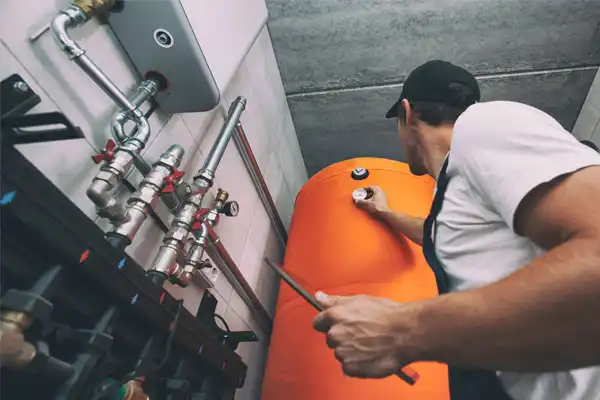
Water heater installation is not glamorous work. Nobody hosts a neighborhood open house to show off a properly sloped relief line. Still, that quiet competence is exactly what you want. Hot water should not be exciting. Exciting is for vacations, playoff games, and finding twenty dollars in an old coat. Your water heater should be dull, dependable, and installed so well you forget about it until the next maintenance reminder.
Name: Service Lion Plumbing Heating Air Electric
Address: 521 W Briardale Ave, Orange, CA 92865, United States
Phone: (657) 567-7305
Website: https://callservicelion.com/
Email: [email protected]
Hours:
Monday: Open 24 hours
Tuesday: Open 24 hours
Wednesday: Open 24 hours
Thursday: Open 24 hours
Friday: Open 24 hours
Saturday: Open 24 hours
Sunday: Open 24 hours
Open-location code: R48R+WV Orange, California, USA
Map/listing URL:
https://www.google.com/maps/search/?api=1&query=Google&query_place_id=ChIJQU4LBWHV3IARtnABtyykSA4
Google Map:
Socials:
https://www.facebook.com/ServiceLionCA/
https://www.youtube.com/channel/UCR_L35QzsRTxYZtX8PxJvPw
Local Service Information
Service Lion Plumbing Heating Air Electric provides plumbing, drain, heating, air conditioning, and electrical services from its Orange, California location.The company serves homeowners and properties throughout Orange and communities across Orange County and surrounding areas.
Available services include plumbing repairs, water heater work, drain and sewer services, heating and cooling service, electrical repairs, panels, lighting, outlets, and related home-system work.
Service is available for residential properties as well as light commercial needs described within the company's local service-area information.
The company's website emphasizes locally operated service, coordinated home-system support, and practical scheduling for plumbing, HVAC, and electrical needs.
The matching public business listing shows the Orange location as open 24 hours a day, seven days a week.
For service information or scheduling, call (657) 567-7305 or visit https://callservicelion.com/.
The public map listing identifies the business at 521 W Briardale Ave, Orange, CA 92865 and can be used for location and direction information.
Popular Questions About Service Lion Plumbing Heating Air Electric
What services does Service Lion Plumbing Heating Air Electric provide?
The company provides plumbing, drain and sewer, heating, air conditioning, and electrical services. Its published services include plumbing repair, water heaters, drain clearing, sewer work, HVAC repair and installation, electrical repairs, panels, circuit breakers, lighting, outlets, and related services.
Where is Service Lion Plumbing Heating Air Electric located?
The matching business location is 521 W Briardale Ave, Orange, CA 92865, United States.
What areas does Service Lion Plumbing Heating Air Electric serve?
The company serves Orange County and surrounding communities. Its published service-area information includes Orange, Anaheim, Brea, Yorba Linda, Fullerton, Huntington Beach, Newport Beach, Costa Mesa, Irvine, Lake Forest, and additional nearby cities.
Is Service Lion Plumbing Heating Air Electric open 24 hours?
The matching public business listing shows the location as open 24 hours on Monday through Sunday.
Does Service Lion Plumbing Heating Air Electric work on drains and sewer lines?
Yes. Published services include drain clearing, rooter service, camera inspection, hydro jetting, sewer line repair and installation, water line work, slab leak detection, and trenchless sewer line repair.
Does Service Lion Plumbing Heating Air Electric provide heating and air conditioning service?
Yes. Its published HVAC services include air conditioning repair and installation, heating service, furnace work, heat pumps, air ducts, indoor air quality assessments, and thermostat installation.
Does Service Lion Plumbing Heating Air Electric provide electrical service?
Yes. Published electrical services include repairs and installations, electrical panels, circuit breakers, safety inspections, lighting, outlets and switches, surge protection, generators, and EV charging equipment installation.
How can I contact Service Lion Plumbing Heating Air Electric?
Call (657) 567-7305.
Email: [email protected]
Website: https://callservicelion.com/
Facebook: https://www.facebook.com/ServiceLionCA/
Landmarks Near Orange, California
Old Towne Orange Historic District
A central historic district and useful geographic reference point for the Orange community.
Plaza Park
A well-known public gathering point in the center of Old Towne Orange.
Orange Public Library & History Center
A civic landmark serving residents near central Orange.
Hart Park
A major public park and recreation area south of central Orange.
Eisenhower Park
A public park serving neighborhoods in northern Orange.
Santiago Oaks Regional Park
A regional recreation and open-space landmark on the eastern side of Orange.
Irvine Regional Park
A large regional park and recognizable reference point east of the city.
Orange Park Acres
A distinctive residential community and service-area reference point in eastern Orange.
El Modena
An established Orange neighborhood that provides a practical local coverage reference.
Glassell Street
One of the city's principal north-south streets and a useful route through central Orange.
Lincoln Avenue
A major east-west roadway serving northern Orange and nearby communities.
State Route 55
A primary regional freeway connecting Orange with other parts of Orange County.