Why Hiring a Licensed Electrician Protects Your Home
Electricity is wonderfully obedient until it is not. It runs the refrigerator, charges the phones, keeps the furnace blower moving, powers the sump pump during a storm, and lets the fancy espresso machine justify its counter space. Then one loose connection, one undersized wire, one bargain-bin breaker, and suddenly your home is auditioning for a fire investigation training video.
That is the blunt reason hiring a licensed electrician protects your home. Not because homeowners are helpless. Plenty of people can replace a light fixture, reset a tripped breaker, or identify the mystery switch that apparently controls nothing except household arguments. The issue is that electrical work hides its mistakes. A plumbing leak repair announces itself with a stain, a drip, or a suspicious soft spot in the ceiling. Bad wiring may sit quietly in a wall for months, warming up every time the microwave and toaster decide to team up. It does not always fail dramatically at first. It can smolder, arc, char insulation, damage appliances, or create shock hazards long before anyone sees smoke.
A licensed electrician brings training, code knowledge, testing equipment, insurance, permitting experience, and the mildly supernatural ability to look inside a panel and know which previous owner fancied himself an inventor. That combination matters more than most people realize.
The problem with “it works”
The most dangerous phrase in home repair is not “hold my beer,” though that one deserves respect. It is “it works.”
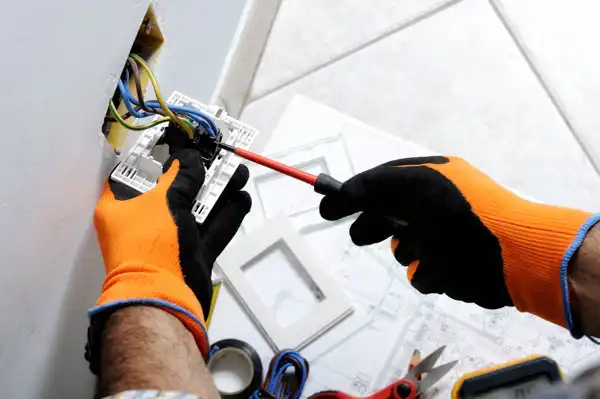
A light can turn on with wiring that is unsafe. An outlet can charge a laptop while lacking proper grounding. A breaker can reset even though the circuit is overloaded. A bathroom fan can run even though it is tied into a circuit in a way that should make a building inspector reach for antacids.
Electricity does not grade on effort. It follows physics. If a connection is loose, resistance increases. Increased resistance creates heat. Heat damages insulation, terminals, breakers, devices, and nearby material. If a circuit is overloaded, the conductors may heat beyond their rating. If the wrong breaker is installed, it may allow too much current before tripping. If a device lacks ground-fault protection where required, a simple fault near water can become a very bad afternoon.
A licensed electrician is trained to think beyond “does the thing turn on?” The better question is, “Does the installation protect people and property under normal use, fault conditions, aging, moisture, vibration, and the creative habits of future homeowners?” That is not as catchy, but it keeps houses from turning into cautionary tales.
Codes are not paperwork. They are scar tissue.
Electrical codes can feel fussy from the outside. Box fill calculations, conductor sizing, grounding requirements, arc-fault protection, GFCI placement, dedicated circuits, bonding, working clearances, labeling. It sounds like bureaucracy wearing safety glasses.
But electrical codes are built from patterns of failure. They reflect fires that happened, shocks that injured people, equipment that failed, and homes that were wired before anyone owned six phone chargers, a treadmill, a home office, an air fryer, and a freezer full of emergency pizza.
A licensed electrician works with the current requirements in your area and knows when older work can remain, when it must be upgraded, and when a change in one place triggers additional safety requirements elsewhere. That last bit surprises people. Installing a new circuit, adding a subpanel, replacing a service, or remodeling a kitchen can bring code considerations that do not fit neatly into a five-minute video.
Local codes also vary. Some jurisdictions enforce specific amendments. Some require permits for work that homeowners assume is minor. Some utilities have their own rules for meter bases, service mast height, grounding electrodes, and panel locations. A licensed electrician deals with inspectors and utilities regularly enough to know where the potholes are. That saves time, money, and the specific type of headache that arrives when a finished wall has to be opened because someone skipped a permit.
The panel tells stories
I have seen electrical panels that looked like organized libraries and panels that looked like a family of raccoons hosted a craft night. The panel is where a licensed electrician can read the history of the house. Not the charming history, like original hardwood floors and holiday photos. The other history.
Double-tapped breakers. Mixed breaker brands. Oversized breakers protecting undersized wire. Missing knockouts. Neutral and ground conductors sharing spaces where they should not. Improperly landed aluminum conductors. Circuits labeled “kitchen?” with the question mark doing most of the work. Sometimes a panel has been modified by multiple people over decades, each adding one little fix. The result can be functional in the same way a chair with three legs and a stack of books is functional.
A licensed electrician does not just add another breaker and hope for the best. They check capacity, load, grounding and bonding, conductor condition, panel rating, manufacturer compatibility, and available spaces. If you are adding major equipment, like heat pump installation, water heater installation, an EV charger, or a workshop circuit, that assessment becomes even more important.
Homes were not all designed for modern electrical demand. Older services may be 60 amps or 100 amps. Many newer homes have 200 amps, but even then, available capacity depends on the actual loads. Central air, electric ranges, electric dryers, hot tubs, well pumps, heat pumps, and electric water heaters all add up. A proper load calculation is less exciting Plumber than guessing, but guessing belongs at trivia night, not inside your service panel.
Fire prevention is not dramatic, which is the point
People often think electrical fires start with sparks spraying like a movie scene. Sometimes they do. More often, the danger is quieter. A loose receptacle behind a couch. A backstabbed outlet carrying a heavy load for years. A junction box buried behind drywall. A light fixture installed with bulbs hotter than the fixture rating. A damaged cable pinched under a staple. A splice made outside an electrical box because apparently walls are magic.
Licensed electricians are trained to prevent the conditions that start fires. That includes proper terminations, correct torque where required, compatible materials, approved enclosures, strain relief, conductor protection, and correct overcurrent protection. None of that sounds glamorous. That is good. Glamour is for chandeliers and people who do not have to pay insurance deductibles.
Arc-fault circuit interrupters, often called AFCIs, are one example of modern protection that many homeowners misunderstand. They are designed to detect certain dangerous arcing conditions and shut down the circuit. Ground-fault circuit interrupters, or GFCIs, protect people from shock by detecting current leakage. They are common in bathrooms, kitchens, garages, crawl spaces, basements, laundry areas, exterior outlets, and other damp or vulnerable locations, depending on code requirements. A licensed electrician knows where these protections are required and how to troubleshoot nuisance tripping without simply removing the safety device, which is the electrical equivalent of fixing a smoke alarm by taking out the batteries and calling yourself a problem solver.
Insurance companies enjoy boring paperwork
Homeowners insurance is not famous for its sense of humor. If a fire, shock, or equipment failure is traced back to unpermitted or improper electrical work, the aftermath can become complicated. Policies vary, and coverage decisions depend on the facts, but insurers tend to ask uncomfortable questions after a loss. Was the work permitted? Who performed it? Was it inspected? Were code requirements followed?
A licensed electrician typically carries liability insurance and, if they have employees, workers’ compensation coverage. Licensing also gives you a route for accountability through state or local regulatory boards. That does not make every licensed contractor perfect, because humans remain stubbornly human, but it does create standards and consequences.
Permits and inspections are also part of the protection. Homeowners sometimes view them as annoying fees. I get it. Nobody wakes up thrilled to pay for permission to improve their own property. But inspections create a second set of trained eyes. They also create documentation that can matter during a sale, refinance, insurance claim, or future remodel. When a buyer asks who installed the new subpanel or kitchen circuits, “a licensed electrician, permitted and inspected” lands much better than “my cousin, who owns a voltage tester and strong opinions.”
DIY electrical work has a narrow lane
There is no need to pretend homeowners should never touch anything electrical. Replacing a cover plate is not a sacred ritual reserved for the robed priesthood of electricians. Many careful homeowners can handle simple tasks within local rules, especially if they understand how to shut off power, verify de-energization, and follow manufacturer instructions.
The trouble starts when a small job is not really small. Replacing a receptacle may reveal old cloth-insulated wire, no ground, a multi-wire branch circuit, aluminum wiring, scorch marks, or a box too small for the device. Swapping a light fixture may expose a ceiling box not rated for the weight of the new fixture. Installing a smart switch may require a neutral conductor that is not present in the switch box. Adding an outlet may require circuit calculations, GFCI or AFCI protection, fire blocking, permits, and proper cable routing.
A good rule is simple: if the work involves the panel, new wiring, hidden splices, exterior power, wet locations, major appliances, or anything you cannot fully explain, call a licensed electrician. Pride is cheaper than a service call only until it is not.
Here is a short checklist of jobs that usually deserve a professional, even if the internet insists they are “easy”:
- Adding new circuits, subpanels, transfer switches, or EV charger wiring
- Upgrading service equipment, meter bases, panels, grounding, or bonding
- Troubleshooting repeated breaker trips, flickering lights, buzzing devices, or warm outlets
- Wiring kitchens, bathrooms, laundry rooms, garages, outdoor areas, pools, spas, or detached structures
- Connecting large loads such as heat pumps, electric water heaters, air conditioning equipment, or shop machinery
That list is not meant to scare anyone away from home improvement. It is meant to separate decorative work from safety-critical infrastructure. Paint color is forgiving. Electricity has a shorter temper.
Licensed electricians protect your expensive equipment too
A bad circuit does not only threaten walls and people. It can quietly shorten the life of appliances and mechanical systems. Modern HVAC equipment, smart thermostats, variable-speed blowers, control boards, compressors, tankless water heaters, and home electronics can be sensitive to voltage issues, poor grounding, loose neutrals, and improper wiring.
This is where electricians overlap with other trades more often than homeowners expect. An air conditioning contractor may diagnose a failed compressor, but the root cause could involve electrical supply problems. An air conditioning repair service may replace a contactor, only to find voltage drop under load. A furnace repair service may suspect a control board failure, while the real culprit is a shared neutral or poor grounding. A heating contractor handling heat pump installation may need a dedicated circuit or service capacity review before the equipment can run safely.
The same is true for water systems. A plumber may install a new electric water heater, but water heater installation still requires safe electrical connections. Water heater repair sometimes reveals scorched wiring at the junction box or an incorrectly sized breaker. Water softener installation usually has modest electrical needs, but even small transformers and outlets near plumbing deserve proper GFCI protection where required. Homes are systems, not a collection of unrelated boxes. The trades overlap, and smart contractors know when to call each other rather than wing it with confidence and electrical tape.
Lighting is another example. A lighting contractor can transform a home with recessed lighting, landscape lighting, under-cabinet fixtures, and dimming controls. But fixture compatibility, load limits, driver locations, heat clearance, low-voltage transformers, and smart controls all matter. The wrong dimmer can make LEDs flicker like a haunted diner. The wrong recessed can in an insulated ceiling can overheat. The wrong exterior installation can fill with water, which electricity considers an invitation to misbehave.
The hidden cost of the cheap fix
The cheapest electrical quote is sometimes cheap because the contractor is efficient, experienced, and already familiar with the work. Lovely. More often, suspiciously low pricing means something is missing: permit fees, proper materials, load calculations, cleanup, labeling, code-required protection, insurance, or time for testing.
I once saw a homeowner save a few hundred dollars on a basement wiring job, then spend several thousand correcting it before selling the house. The original work had no permits, too few circuits, improper junctions, and recessed fixtures installed in ways that made insulation clearance a problem. The buyer’s inspector caught enough to raise questions. The buyer’s electrician found the rest. The basement looked finished, but electrically it was a rough draft with drywall over it.
That is the maddening part. Bad electrical work often looks fine once the plate covers are on and the walls are painted. The savings feel real until the inspection, the outage, the nuisance tripping, the failed appliance, or the smell of hot plastic.
A licensed electrician costs more than a handyman with a roll of wire in the trunk because the job includes more than physical labor. You are paying for knowledge of code, correct materials, proper tools, safe methods, insurance, licensing, continuing education, and the judgment to say, “No, we should not do it that way.” That last service is underrated. A professional who refuses a bad idea may be the best bargain you ever get.
What “licensed” actually means
Licensing varies by state, province, county, and city, so the details depend on where you live. Generally, a licensed electrician has completed classroom and on-the-job training, passed exams, and works under rules set by a licensing authority. Many areas distinguish between apprentice, journeyman, and master electrician levels. Electrical contractors may need separate business licensing, bonding, and insurance.
Do not feel awkward asking for proof. A reputable electrician will not be offended. They may even appreciate dealing with a homeowner who cares about doing things properly. Ask whether the person or company is licensed for your jurisdiction, whether the work will be permitted if required, and whether they carry liability insurance. If the answer is a dramatic sigh followed by “permits are just a scam,” you have learned something valuable, and not about permits.
A licensed electrician should also be willing to explain the plan in plain language. You do not need a lecture on every article of the outdoor lighting contractor electrical code, but you should understand what work is being done, why it matters, what areas of the home will be affected, whether power will be shut off, and what the finished result includes. If the project involves a panel replacement, service upgrade, generator inlet, outdoor circuit, or large equipment, the electrician should be able to discuss permitting and inspection steps clearly.
The safety issues homeowners can spot
You do not need to be an electrician to notice warning signs. Your home often gives clues before trouble becomes serious. The trick is not to explain them away as personality quirks. Houses have character. Outlets should not.
Call a licensed electrician if you notice these symptoms:
- Breakers trip repeatedly, especially on the same circuit or when specific appliances run
- Outlets, switches, plugs, or cords feel warm, smell burnt, buzz, crackle, or show discoloration
- Lights dim dramatically when appliances start, or flicker without an obvious cause
- You find two-prong outlets, missing GFCI protection near water, loose receptacles, or extension cords used as permanent wiring
- Your panel has rust, moisture, scorch marks, missing covers, unknown breakers, or signs of amateur modifications
Some issues are urgent. Warm devices, burning smells, arcing sounds, visible scorch marks, or wet electrical equipment should be treated seriously. Shut off the circuit if you can do so safely, avoid touching damaged equipment, and get professional help. Electricity does not reward bravery. It rewards distance.
Why homes with older wiring need extra care
Older homes can be wonderful. Thick trim, real plaster, mature trees, porches built for actual sitting. Their wiring, however, may have been designed for a very different life. Knob-and-tube wiring, cloth-insulated cable, ungrounded circuits, outdated panels, fuse boxes, and early aluminum branch circuits all require knowledgeable evaluation.
Not all older wiring is automatically dangerous. Condition matters. Modifications matter. Load matters. Environment matters. The problem is that older systems are often mixed with decades of additions. Someone added a dishwasher here, a basement freezer there, a bathroom heater, a window air conditioner, a garage outlet, a sump pump, maybe a finished attic office. The original system may have been perfectly adequate when the biggest electrical ambition in the house was a lamp and a radio. Then modern life arrived carrying a hair dryer and a space heater.
A licensed electrician can inspect the system and recommend practical priorities. Sometimes the right answer is a full rewire. Sometimes it is adding grounded circuits where needed, replacing a dangerous panel, improving GFCI protection, correcting open junctions, or reducing overloaded circuits. Good electricians understand budgets. They can often separate immediate hazards from planned upgrades. The worst approach is pretending old wiring is fine because it has not failed yet. That is not confidence. That is electrical astrology.
Remodeling without electrical planning is asking for drama
Kitchen and bathroom remodels are where electrical planning pays off early. By the time cabinets are installed and tile is finished, changes become expensive and emotionally spicy. A licensed electrician should be involved before the walls close, preferably before the final layout is locked.
Kitchens often need multiple small-appliance circuits, dedicated circuits for major appliances, GFCI protection, lighting layers, disposal and dishwasher wiring, range or cooktop circuits, microwave circuits, and sometimes provisions for future equipment. Bathrooms need careful protection because water and electricity have a relationship best described as hostile. Laundry rooms, garages, basements, workshops, and outdoor kitchens also carry specific requirements.
This is also where other contractors intersect. A plumber roughing in a new island sink may affect where receptacles can go. Drain cleaning, rooter service, hydrojetting, septic system service, and plumbing repiping are not electrical jobs, but access to walls, slabs, crawl spaces, and mechanical rooms can reveal wiring hazards or require temporary power considerations. A gas installation service may be adding gas appliances, but ignition systems, controls, venting fans, and bonding can still touch the electrical side. An air conditioning maintenance visit or air conditioning tune-up may uncover that outdoor disconnects, whips, or circuits are deteriorated. Coordination saves everyone from the classic remodel sentence: “I wish we had known that before.”
Permits make future-you less irritated
Permits are not exciting. Nobody frames them next to wedding photos. Still, they are one of the best protections homeowners have.
A permitted job typically means the work is documented, reviewed, and inspected. The inspection does not guarantee perfection, but it catches many errors and establishes that the work was performed under the local process. For substantial electrical projects, that record can help when selling the home or proving that upgrades were legitimate.
Unpermitted work can become a problem during real estate transactions. Home inspectors are not code inspectors, but they are very good at noticing suspicious additions, unlabeled panels, missing GFCIs, exposed wiring, and “creative” garage circuits. Buyers may ask for repairs, price reductions, or documentation. If you cannot provide permits for obvious work, negotiations can get unpleasant fast.
There is also peace of mind. When a licensed electrician pulls a permit and passes inspection, you know the work was not just hidden behind drywall and optimism. That matters.
Licensed does not mean you stop paying attention
Hiring a licensed electrician is smart, but choosing the right one still matters. Licensing is a baseline, not a personality test. Look for clear communication, written estimates, realistic scheduling, and a willingness to discuss permits. Be cautious with anyone who pressures you to skip inspection, refuses to identify materials, will not provide licensing information, or offers vague promises like “we’ll make it work.” That phrase belongs to reality TV renovations, not electrical systems.
A proper estimate should describe the scope. It may not list every wire nut, but it should say what circuits, devices, panels, fixtures, protection, or equipment are included. For troubleshooting, pricing can be less predictable because the electrician may need time to trace the fault. That is normal. Electrical troubleshooting is detective work, except the suspect can shock you.
Expect good electricians to protect floors, cut openings carefully when needed, label panels, test devices, and explain anything unusual they find. Also expect them to say when another trade is needed. If water intrusion is damaging a panel, you may need roofing or plumbing help. If HVAC equipment is failing, the air conditioning repair service or heating contractor may need to coordinate. If a trench is needed for exterior wiring, site conditions may affect cost. Honest trade-offs are a sign of competence, not indecision.
The quiet value of doing it once
Electrical work is not the most visible home improvement. Guests notice countertops, paint colors, and whether the bathroom mirror makes everyone look tired. They rarely admire properly torqued lugs or a clean grounding electrode conductor. That is unfair, but safety has never been a show-off.
Hiring a licensed electrician protects your home because it puts the invisible parts of your house in trained hands. It reduces fire risk, shock risk, equipment damage, insurance trouble, inspection problems, and future repair costs. It also gives you a better foundation for every modern convenience you expect your home to support, from reliable lighting to air conditioning repair, from furnace controls to heat pump installation, from water heater repair to the outlet that powers the router during the one video call you absolutely cannot drop.
Your home does not need heroic electrical work. It needs correct electrical work. Proper wire sizes. Proper breakers. Solid connections. Grounding and bonding that do their jobs. GFCI and AFCI protection where required. Panels that are not overcrowded museums of bad decisions. Circuits that match real loads. Permits when needed. Inspections when required. Documentation for the next person, who may be you in five years wondering what on earth “misc” means on breaker 17.
Electricity is too useful to fear and too dangerous to treat casually. A licensed electrician sits in that sensible middle ground. They help your home run the way it should, quietly, safely, and without turning your weekend project into a neighborhood event involving sirens. That is protection worth paying for.
Name: Service Lion Plumbing Heating Air Electric
Address: 521 W Briardale Ave, Orange, CA 92865, United States
Phone: (657) 567-7305
Website: https://callservicelion.com/
Email: [email protected]
Hours:
Monday: Open 24 hours
Tuesday: Open 24 hours
Wednesday: Open 24 hours
Thursday: Open 24 hours
Friday: Open 24 hours
Saturday: Open 24 hours
Sunday: Open 24 hours
Open-location code: R48R+WV Orange, California, USA
Map/listing URL:
https://www.google.com/maps/search/?api=1&query=Google&query_place_id=ChIJQU4LBWHV3IARtnABtyykSA4
Google Map:
Socials:
https://www.facebook.com/ServiceLionCA/
https://www.youtube.com/channel/UCR_L35QzsRTxYZtX8PxJvPw
Local Service Information
Service Lion Plumbing Heating Air Electric provides plumbing, drain, heating, air conditioning, and electrical services from its Orange, California location.The company serves homeowners and properties throughout Orange and communities across Orange County and surrounding areas.
Available services include plumbing repairs, water heater work, drain and sewer services, heating and cooling service, electrical repairs, panels, lighting, outlets, and related home-system work.
Service is available for residential properties as well as light commercial needs described within the company's local service-area information.
The company's website emphasizes locally operated service, coordinated home-system support, and practical scheduling for plumbing, HVAC, and electrical needs.
The matching public business listing shows the Orange location as open 24 hours a day, seven days a week.
For service information or scheduling, call (657) 567-7305 or visit https://callservicelion.com/.
The public map listing identifies the business at 521 W Briardale Ave, Orange, CA 92865 and can be used for location and direction information.
Popular Questions About Service Lion Plumbing Heating Air Electric
What services does Service Lion Plumbing Heating Air Electric provide?
The company provides plumbing, drain and sewer, heating, air conditioning, and electrical services. Its published services include plumbing repair, water heaters, drain clearing, sewer work, HVAC repair and installation, electrical repairs, panels, circuit breakers, lighting, outlets, and related services.
Where is Service Lion Plumbing Heating Air Electric located?
The matching business location is 521 W Briardale Ave, Orange, CA 92865, United States.
What areas does Service Lion Plumbing Heating Air Electric serve?
The company serves Orange County and surrounding communities. Its published service-area information includes Orange, Anaheim, Brea, Yorba Linda, Fullerton, Huntington Beach, Newport Beach, Costa Mesa, Irvine, Lake Forest, and additional nearby cities.
Is Service Lion Plumbing Heating Air Electric open 24 hours?
The matching public business listing shows the location as open 24 hours on Monday through Sunday.
Does Service Lion Plumbing Heating Air Electric work on drains and sewer lines?
Yes. Published services include drain clearing, rooter service, camera inspection, hydro jetting, sewer line repair and installation, water line work, slab leak detection, and trenchless sewer line repair.
Does Service Lion Plumbing Heating Air Electric provide heating and air conditioning service?
Yes. Its published HVAC services include air conditioning repair and installation, heating service, furnace work, heat pumps, air ducts, indoor air quality assessments, and thermostat installation.
Does Service Lion Plumbing Heating Air Electric provide electrical service?
Yes. Published electrical services include repairs and installations, electrical panels, circuit breakers, safety inspections, lighting, outlets and switches, surge protection, generators, and EV charging equipment installation.
How can I contact Service Lion Plumbing Heating Air Electric?
Call (657) 567-7305.
Email: [email protected]
Website: https://callservicelion.com/
Facebook: https://www.facebook.com/ServiceLionCA/
Landmarks Near Orange, California
Old Towne Orange Historic District
A central historic district and useful geographic reference point for the Orange community.
Plaza Park
A well-known public gathering point in the center of Old Towne Orange.
Orange Public Library & History Center
A civic landmark serving residents near central Orange.
Hart Park
A major public park and recreation area south of central Orange.
Eisenhower Park
A public park serving neighborhoods in northern Orange.
Santiago Oaks Regional Park
A regional recreation and open-space landmark on the eastern side of Orange.
Irvine Regional Park
A large regional park and recognizable reference point east of the city.
Orange Park Acres
A distinctive residential community and service-area reference point in eastern Orange.
El Modena
An established Orange neighborhood that provides a practical local coverage reference.
Glassell Street
One of the city's principal north-south streets and a useful route through central Orange.
Lincoln Avenue
A major east-west roadway serving northern Orange and nearby communities.
State Route 55
A primary regional freeway connecting Orange with other parts of Orange County.